

Warner Brothers has patented the key mechanic from its popular Middle Earth video games, based on lore written by J.R.R. Tolkien and adapted in the Lord of Rings trilogy.
The patent, effective Feb. 23 with an option to maintain until 2035, is for the “Nemesis System,” a gameplay and storytelling tool.
As implemented in Shadow of Mordor and its sequel Shadow of War, the game keeps track of the player’s encounters with the game’s main antagonistic faction: orcs. Specifically, player deaths influence the enemy hierarchy, wherein orcs who defeat the player get promoted and gain power.
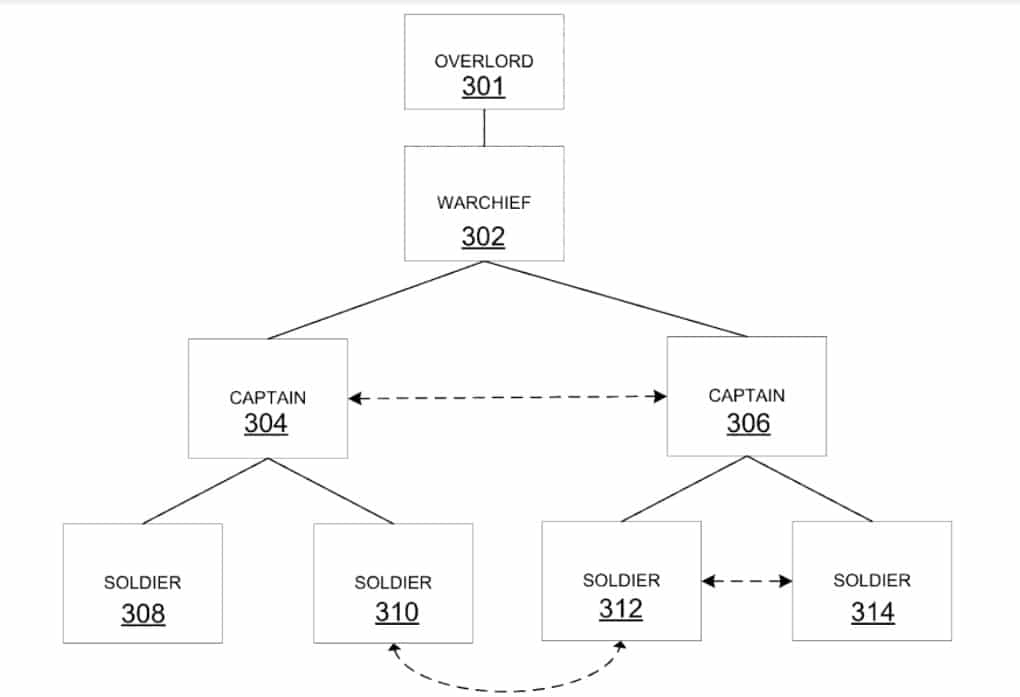
Multiple losses to the same enemy can elevate it into the player’s own “nemesis,” with the game supplying dialogue and modifying attributes to reflect each encounter. Warner Bros’ patent referred to these expanding interactions as “social vendettas.” It also mentions systems related to non-player characters “evolving” based on the player’s actions, like quests and events.
It took five years for Warner Bros to receive approval from the U.S. Patent and Trademark Office for the Nemesis System. But the California-based media giant’s gaming arm is not the first to secure a patent of this kind.
A game and its mechanics, as software, are patentable. A video game’s contents may not be entirely covered by copyright law, unlike other mediums like film and music. Hence, game companies like Sega, Bandai-Namco, and Square Enix have sought patent protection for systems implemented in Sonic, Tekken, and Final Fantasy, respectively.
These game mechanic patents have been the subject of controversy over the years, with people citing them as a bottleneck on innovative game design — confining mechanics to a single developer and preventing iteration from external creatives.
But in an industry where costly legal battles have been waged over blatant clones, there is great incentive to patenting one’s content. Particularly, differentiating oneself in the crowded, $159-billion market of video games.