
3D-printed noses could grant further insight into how fighter pilots breathe across altitudes, a new patent application from the U.S. Air Force Research Lab shows.
Hypoxia, or oxygen deprivation, is an ever-present threat to pilots. While breathing masks come standard with modern military aircraft, their oxygen concentration has proven dangerously inconsistent.
The technology in the AFRL patent application aims to provide more realistic and informative evaluations of air quality, as well as how the human respiratory system responds to different atmospheric compositions.
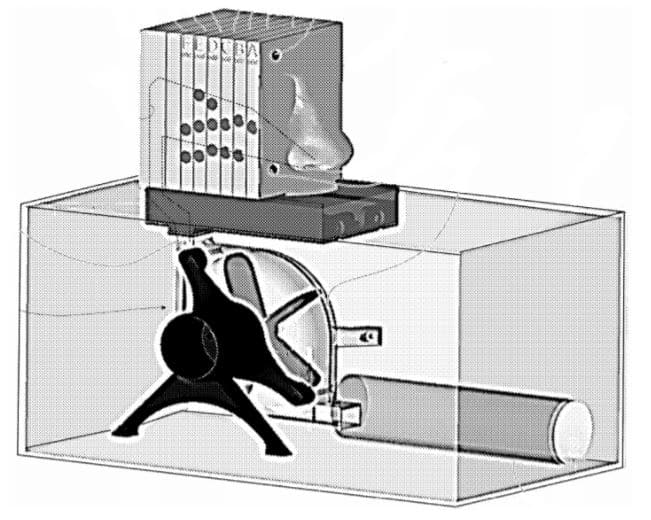
The invention comprises a 3D-printed nasal cavity attached to a fan system that can include environmental monitors like an anemometer. The nasal cavity itself is modelled after CT scans, and is sectioned into slides. Together, they form the labyrinth of nasal bones called turbinates, responsible for warming, humidifying, and cleansing air.
If approved, the patent could aid respiratory research efforts, including air quality monitoring and nasal drug discovery. Among its benefits is how 3-D printing circumvents the time-consuming process of creating a nose simulator with its anatomical intricacies. Typically, this would involve machining glass or silicone to the dimensions of a nasal cast sourced from a cadaver.
While cadavers have been a valuable resource in the field of medicine for centuries, knowledge on the human anatomy they provided is enabling advances in bioengineering that could revolutionize healthcare.
Even the ethical quandaries of animal testing can be circumvented using bioengineering. Researchers in Berlin have developed technology similar to AFRL’s invention: a multi-organ chip that replicates human metabolic processes. Both are touted as highly accurate recreations offering reliability to future research.
From lab-grown organs to artificial wombs to even synthetic cadavers, there are many beneficial discoveries to be made on the way to a fully engineerable living world. The technology described in the AFRL patent only adds to the list, and upon passing the U.S. Patent and Trademark Office’s scrutiny, the data it produces could have life-saving applications.